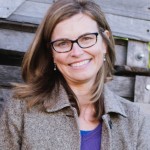
Meet Karen Washington, Community Activist and UVM Food Systems Summit Speaker

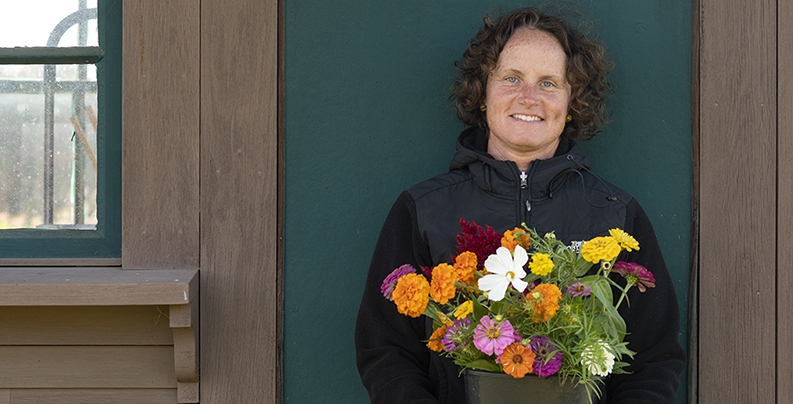
Karen Washington has lived in New York City all her life and has been a resident of the Bronx for over 26 years. Since 1985 Karen has been a community activist, striving to make New York City a better place to live. As a community gardener and board member of the New York Botanical Gardens, Karen has worked with Bronx neighborhoods to turn empty lots into community gardens. We asked her to blog for us as we approach the UVM Food Systems Summit in June, at which she will be a speaker.

Hi, my name is Karen Washington and I will be one of the speakers at the UVM Food Systems Summit in June. Leading up to that event, I have been asked to blog about my experiences along the way.  I am definitely new to blogging. I barely have the time to read my email, but I promised to take a stab at writing down food events where I will be speaking or attending as I make my way to UVM in June. Charge!

To start, this morning my colleagues Lorrie Clevenger, India Rogers and I spoke to a group of young students from Kalamazoo, MI. They belong to a faith based organization from the Methodist Church and are here for 10 days to learn about urban agriculture.

Over the past few days, they visited a rooftop farm, a community garden, and an urban farm. They’ve been very much impressed by what they have seen. I don’t think they have many community gardens and rooftop farms in Kalamazoo; as one put it “imagine growing food in a big city like New York”.

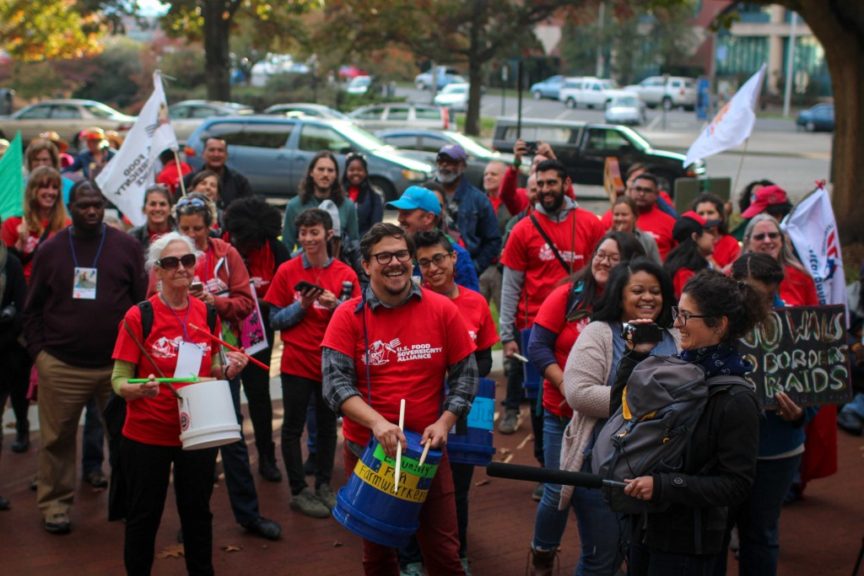
So this morning, we talked to them about food justice and its impact locally and globally. We told stories from our own experiences and perspectives about the way food has impacted our lives and the lives of people of color along the food chain.

What was intriguing for me was this new transformation I have been feeling around food and faith. Realizing that one of the reason I grow food is my faith. For years I have been growing food in NYC, and speaking out against the injustices present in the food system, but what was my drive? Aha, I got it! The essence of my drive was faith based. Now, I am not saying that I am some sort of religious fanatic. But for me, when looking at poverty and hunger head on, the fight goes deep.

So as I stood before the students today, I needed no props, PowerPoint, notes or handouts. I just spoke the truth. The message being “we all play an important part in our food system, from the person who harvests to the person who serves on our plate; thus a sustainable food system can only happen if the system is fair and just, not just for some but for all”.

–Karen Washington

Posted in Economic, Environmental, Health, Social | Leave a comment

Meet Tanya Fields, Food Systems Revolutionary and UVM Food Systems Summit Speaker

This interview was originally published by Chelsea Green Publishing on May 9, 2013.

Tanya is Executive Director of The BLK ProjeK. Inspired by her experiences as a single working mother in a marginalized community, Executive Director Tanya Fields created and founded the BLK ProjeK in 2009. Tanya will be both an instructor and speaker at the University of Vermont Food Systems Summit in June.

In New York City, one and a half million people (out of 9 million) are food insecure, meaning they do not have access to healthy, good quality affordable food.

While many of the city’s residents can afford to dine out in expensive restaurants or shop at upscale markets, there are neighbors, many of them children, who go to sleep hungry. Many organizations have stepped up to deal with this crisis in food insecurity. One of those is BLK ProjeK in the South Bronx, headed by Tanya Fields. UVM interviewed her about the successes and challenges of building a sustainable food system in the biggest city in the US.

University of Vermont: How did you get involved in BLK ProjeK?

Tanya Fields: I was born and raised in Harlem, a community that I love, but that I could no longer live in due to gentrification. I moved to the South Bronx several years ago. It was an eye opener. I became much more aware of food insecurity, particularly among children. When my own child became ill, I realized that the quality, quantity and affordability of healthy food was a key determinant of health.

I also realized that social activism had a major role to play in the solution. We can complain about a perceived problem, but unless we do something, take action, the problem will persist. BLK ProjeK has two intertwined missions: to make healthy food accessible, and to develop leadership skills in local youth, particularly females.

UVM: In a city as big as New York is that an insurmountable task?

TF: No. If I thought that way, I would not be able to do my work. We are very small as an organization and it is difficult to get the funding that we need to sustain our work, but we are making changes everyday. Next month, we launch our Mobile Market, which will bring the needed healthy food to the people who need it most in this community.

UVM: There are several organizations, some big and some small, that do work similar to yours. How do you differ?

TF: Sadly, the organizations that have been around for many years and some newly formed organizations, have more than a million people to serve. That’s important work for all of us. We spend all of our money on food and delivery to the most in need. We don’t spend money on brochures and t-shirts because we just don’t have it to waste. We invest our money in solutions that increase access and create opportunities for people to feed themselves and their families.

UVM: What do you see as most important agenda in fixing the broken food system?

TF: Leadership. Particularly among the people who know these underserved communities first hand. I grew up seeing the dynamics in my neighborhood, in the schools, in social networks. I understand the issues because I lived them. But that is not enough. We need to develop leadership so that change is achieved though policy, though concrete solutions. A delivery of food to someone hungry is vital. Even more important is being an instrument of change, so that the system of food insecurity does not perpetuate itself.

Posted in Economic, Environmental, Health, Social | Leave a comment

The Vermont Food System Atlas: A Clearinghouse Website to Advance our Local Food System

Erica Campbell is the Vermont Farm to Plate Program Director

The Vermont Farm to Plate Network is a statewide initiative legislatively directed to strengthen Vermont’s food system and increase local food production and consumption by 2020. It’s made up of over 225 organizations encompassing farm and food system businesses, educational institutions, nonprofit organizations, and government agencies.

The Vermont Sustainable Jobs Fund helps coordinate the Network and is launching the much anticipated Vermont Food System Atlas this spring. The Atlas features thousands of food system resources including stories, videos, job listings, data, a searchable map, and all sections of the Farm to Plate Strategic Plan—the most comprehensive food system plan in the country and the first in New England. The Atlas provides a one-stop web portal searchable by people and places, region, keyword, and food system categories to enable partnerships to help reach the 25 goals of the plan.

Network members are getting excited for the Atlas to go live. “As a diversified farmer, I anticipate being able to use the Food System Atlas as a single source to connect with all the resources available to help me farm successfully,” says John Cleary of Cleary Family Farm in Plainfield. “Improving farmer access to technical assistance programs, educational workshops, and financing opportunities will help Vermont farmers grow and develop new markets. In my role as a fieldman for Organic Valley, the Atlas will help me connect new and existing farmers with market opportunities offered by our farmer-owned cooperative.”

The Vermont Food System Atlas will also serve as the communication hub for the businesses, organizations, and stakeholders engaged in the Network. Members collaborate in working groups and task forces and are developing and initiating specific projects to meet the plan’s goals, including increasing consumption of local food, diversifying production, and soil conservation. Besides helping these groups stay connected and coordinated, the Atlas will serve as and indicators dashboard to track the progress we’re all making toward building a resilient, viable, and sustainable local food system.

The Vermont Farm to Plate Network is not only working to grow Vermont’s food system but is also helping build a vibrant food system for the Northeast. Network members are active participants in the Northeast Sustainable Agriculture Working Group (NESAWG) and the Food Solutions New England (FSNE) Network. Vermont is also playing an important role in helping other states develop food system plans. The Food System Atlas helps bridge Vermont’s multi-faceted local food efforts and programs to a statewide level to prepare Vermont for its vital role in creating a robust regional food system.

One May 13 the Vermont Food System Atlas will go live to the public, www.vtfoodatlas.com. Follow Vermont Farm to Plate news and updates on Twitter at @VTfarm2plate.

Posted in Economic, Environmental, Health, Social | Leave a comment

Real Food Television (Webivision)

Kierstin Wall is a UVM student who recently started the blog Sustainabelly in her Food and Media course.

I would like to introduce you all to The Perennial Plate, a weekly documentary series dedicated to adventurous sustainable eating. The series follows Perennial Plate founder, Daniel Klein on his adventures eating socially responsible and sustainable food.

I just started the first season (there are three), which follows Klein for a year in Minnesota while he discovers the joys and challenges of eating sustainably. The second season Klein, his girlfriend and co-producer, Mirra Fine travel across the US on a sustainable food adventure. This season, the duo is traveling the world:

This web series is unlike anything I have seen before, it is informational, captivating, inspirational and insightful. In the first season, Klein hunts for his own meat and mushrooms, butchers a sheep, produces his own cheese, and builds meaningful relationships through food.

I would like to stress the importance of entertainment documentaries like Perennial Plate. I learned so much more about local food systems, sustainable eating, and agriculture from watching a few episodes than I have from any popular show on television. I also learned a couple really amazing recipes.

Why do the majority of Americans prefer to watch Rachael Ray and Emeril cook not-so-sustainable food, that the audience will never be able to re-create, in a fantasy kitchen that most of the audience will never be able to own?

Why hasn’t Food Network produced a local and sustainable cooking show yet? Is there not an audience for this?

I would like to challenge television and webivision (a new term I coined for watching online episodes) watchers to partake in viewing shows that benefit your well being. Why does the purpose only have to be for entertainment? Why does the audience only have to be consumers?

Think about the purpose behind what television (or webivision) episodes you watch. Are you gaining anything from it?

This episode discusses both challenges and rewards of owning a small-scale farm. Living in a city like Burlington, VT, I think this is something that happens every day that many of us who are purchasing local food don’t see. Enjoy!

Posted in Economic, Environmental, Health, Social | Leave a comment

A Change of Pace for Food TV

Justin Adelman is a senior at the University of Vermont studying Public Communications. On his blog, Not So TV Dinner, he writes about how food and cooking are falsely portrayed on TV.

“Cooking Up a Story” is an online TV show & blog about food and sustainable living. I was shocked. Sustainable living? How is it that this online TV show is more up with the times than the Food Network or Cooking Channel? For once I found a TV show that focused on local ingredients, family farmers and sustainability rather than back-to-basics, 30-minutes and semi-homemade. The description of “Cooking Up a Story” reads as follows: “Cooking Up a Story is a show about people, food and sustainable living. Each episode portrays the passion of family farmers, artisan producers, and a diverse range of everyday people whose lives center on food, and sustainable living. These personal stories are told in the voice of the subject, without a prepared script, and filmed in their native surroundings to bring people behind our food to life.”

Why is there a lack of food TV programming aimed at sustainable living and food creation? I think the Food Network is a little behind in the “going green” movement. No sets, no scripts, no food magic just people who have a passion for sustainable living and food. From “wild and cultivated mushrooms” to “cooking catfish and hush puppies southern style” this TV show is redefining what it means to cook. Nothing fancy, no KitchenAid appliances or complex kitchen utensils, just passionate people who love to cook, care about their local food, local ingredients and the environment.

I think it’s important to have programming representing these values and lifestyles. I feel like these are overlooked a lot in food production and food entertainment. Sustainability, family farmers and local ingredients are important factors in what should be represented in cooking shows. “Cooking Up a Story” is taking steps to change that. This new, innovative online TV show should be used as inspiration to motivate home chefs and food fanatics to reach out to local food producers, find local ingredients and to cook sustainably. So let’s take out the old and bring in the new. Cooking sustainably is just a better way to cook. I challenge all of you to change it up and cook for your own self-fulfillment while reaching out to local farmers growing fresh, delicious produce or artisan producers crafting the heartiest bread or creamiest cheeses.

Keep it simple, keep it fresh, keep it sustainable.

Posted in Economic, Environmental, Health, Social | Leave a comment

Sheble-Hall: A Right to Know what’s in Our Food

Timothy Gillis Sheble-Hall is a senior at the University of Vermont who is studying food systems. He grew up on a sheep farm in Dover, Mass.

Labeling GMOs is a policy rooted in power. The passage of such a policy would transfer power from wealthy corporations towards consumers. Consumers want to know what’s in their food, it is a basic right. Over fifty countries, including members of the European Union, Japan, and China, have already instituted a labeling policy. In contrast, we haven’t even had a decent debate in America. Patent law provides a huge obstacle to research, and discussion is hushed around the topic.

Polls have shown that over 90% of Americans want food made with GMO ingredients labeled. Given this statistic, does it not seem logical that this policy would come to fruition through basic democratic process? Unfortunately, a disproportionate amount of the power in the decision-making process has been held by the opposition. Proposition 37, a measure in California’s November elections that would have mandated the labeling of food made with GMO ingredients, lost by six percentage points. The opposition to the bill spent $45 million dollars, as opposed to the proponents’ $6.7 million. In Vermont, a labeling bill has already been voted on in the House agricultural committee with strong support as it heads to the house floor. Guess what folks? We can win this thing.

Vermont certainly does not have the financial resources to outspend the wealthy opposition to GMO labeling, but we do have something they don’t: people power. Through grass roots organizing, Vermont has continually led the nation in change for the better. I think of power as the ability to make something happen that otherwise wouldn’t have without your influence. When Vermonters come together and use our collective voice, we yield tremendous power.

VT Right to Know GMOs is a coalition of organizations (Rural Vermont, NOFA-VT, VPIRG) that are organizing Vermonters who want to take action to support the bill to label GMOs. Recently, forums were held around the state in order to bring folks together to talk about the bill, and how to take action. If you want to see Vermont lead the nation in labeling GMOs, here are some ways to get involved:

  • Sign the Petition (http://www.vtrighttoknow.org/)
  • Contact Your Legislator-through phone, email, or in person. Let them know where you stand.
  • Write a Letter to the Editor at Your Local Newspaper.
  • Spread the Word! – Talk to your friends, neighbors, and colleagues about this issue.

Let’s come together for the right to know what’s in our food.

Posted in Economic, Environmental, Health, Social | Leave a comment

UVM Students Support Farming in the City

Alison Nihart is the Assistant to the Food Systems Initiative at the University of Vermont

As people continue to seek ways to connect with their food, urban agriculture has been gaining popularity in communities across North America because of the social, economic, and environmental benefits it can offer to individuals and neighborhoods. Urban agriculture can be broadly defined as growing food within a city. The term can embody a range of activities, including home, school, rooftop, and community gardens, urban livestock and poultry, beekeeping, commercial farming, and the use of agricultural structures such as of greenhouses and hoophouses. Some definitions of urban agriculture encompass post-production activities such as processing, distribution, and marketing. Urban agriculture can be commercial, noncommercial, or a hybrid. In terms of scale, urban food production can occur in a space as small as a container on a balcony all the way up to agricultural fields many acres in size.

I became interested in urban agriculture when I came to the University of Vermont in the fall of 2010 to start my master’s in Natural Resources. I knew I wanted to find a thesis research project that got me out in the community working on local food issues, and within the first few months of arriving in Vermont, I learned about an effort to investigate how the City of Burlington’s policies do and do not support food production in the city. This project became the subject of my thesis, and since completing my graduate program I have continued my involvement through my role as Facilitator for the Burlington Food Council.

The City of Burlington has a strong local food culture and hosts many of Vermont’s most successful community food system models, including community supported agriculture from the city’s peri-urban farms, a year-round farmers’ market (several others operate on a seasonal basis), a downtown food co-op that sources a significant amount of local produce, meat, and value-added products, restaurants featuring local food and seasonal ingredients, and a variety of community garden and food security organizations.  The value of local food systems is widely appreciated in our community.

However, some ambiguous and outdated regulations sometimes get in the way of residents growing their own food. For example, a zoning definition that was originally designed to regulate boarding kennels is the closest rule code enforcement officers have to regulate livestock, so residents are limited to keeping no more than 4 chickens. Similarly, hoophouses are currently regulated like any other structure in the city, which means the owner must apply for a $90 permit to erect one. Rules like these were not developed for urban agriculture in mind, and they pose barriers to Burlington residents wishing to feed themselves from their own yards.

During my thesis research, I had the opportunity to spearhead a collaborative and community-based research project with Burlington’s Urban Agriculture Task Force, during which we engaged with local stakeholders in an 18-month research and public participation process to determine how the city’s current laws affect food production in the city. This past fall, the project culminated in a report to Burlington’s City Council outlining recommendations on how the city could remove policy barriers to urban food production and support innovative new projects.

Even with small local issues like this, policy change takes time. Although the report allowed us to show the broad public support for urban agriculture and recommend next steps for the city to take, the recommendations need to go through the city’s policy development process before they can be adopted. Currently, recommendations regarding livestock and structures are under consideration by the Burlington Board of Health and Planning Commission. This semester, a group of UVM seniors are continuing the work of the Task Force as part of their senior capstone course. Hannah Swanson, Nick Garcia, and Leah Delaney are working with the Burlington Food Council and city officials to help the recommendations developed by the Task Force come to fruition. UVM’s commitment to food systems scholarship and community-based research has provided a supportive environment for me and other UVM students to help Burlington join the growing list of cities that are revising their policies so their residents are better able to grow their own food.

Posted in Uncategorized | Leave a comment

CDAE Faculty Tackle Sugar- Sweetened Beverages

Danielle Bilotta is a senior at the University of Vermont and the CDAE Strategic Communications Intern

For the last two years UVM faculty have been working on research to support a possible excise tax on sugar-sweetened beverages in Vermont. CDAE faculty members Richard Watts, Jane Kolodinsky, and Sarah Heiss have been researching various issues related to the potential penny-per-ounce tax. Thanks to a few grants, surveys, and a lot of hard work, the team has been able to refute claims from naysayers, help make the policy process more transparent to the public, and encourage advocates to change their ways in order to help pass the bill.

Jane Kolodinsky: 

CDAE department chair and professor Jane Kolodinsky became involved in this research in 2011 because of her interest in food choice, obesity and her work as an applied economist and survey researcher. After being contacted by Peter Sterling, the founding Executive Director of the Vermont Campaign for Health Care Security Education Fund, the two collaborated to receive a Robert Wood Johnson Grant to collect the data they needed.

Opponents of the bill—Kolodinsky refers to them as “naysayers”—claim that adding a tax to sugar-sweetened beverages would put Vermont stores out of business, especially near the New Hampshire border. The problem with this claim is that there is no published data to support it, Kolodinsky said.

To address these concerns nonetheless, cross-border questions were added in their survey analysis. Ultimately, their research showed there would be no additional effects along the border.

“If you think about it logically, I go to the gas station, fill up my car, and I want a single serving of something…I’m going to get in my car and drive to New Hampshire? No,” she said. “I’ll probably use at least 50 cents in gas just to save 13 cents. It just doesn’t make sense.”

In order to prove consistency with these results, questions about the sugar-sweetened beverage tax will be added to this year’s Vermonter Poll, conducted by UVM’s Center for Rural Studies, which examines changes in public opinion regarding Vermont-specific issues.

Kolodinsky believes looking at larger health policy decisions and the issue of health policy is both important and salient for many CDAE students.

“If you’re a PCom major, it shows you how to communicate to the public,” Kolodinsky said. “For entrepreneurship majors, they have to make their business stocking decisions in their stores, so how does it affect their store and what are they going to sell? And for community and international development majors, it’s looking at societal issues of which obesity is not only a U.S. issue anymore: It’s around the world.”

Richard Watts:

With an interest in studying important public policy, Richard Watts’ began his research on this issue in Spring 2011.

“I’m interested in how public policy emerges through the legislative process,” Watts said. “In this case, the public policy issue has to do with soda, which has been implicated in our obesity crisis.”

Opposition comes from three primary groups, Watts said: the Grocers Association, the Vermont Retail Association and beverage industry lobbyists. He hopes to show that all three oppose the bill because they fear losing profit if it becomes law.

“I’m collecting media articles, he said, “trying to see who shows up in the media articles and what those debates are about.” Watts said. “Part of what I’m interested in trying to do is to open up a process and make it more transparent, so people can see how they’re being manipulated by the industry to drink these things that are very bad for them,” he said.

Watt’s research compares the fight to previous debates about taxing tobacco for health reasons, but he said it’s harder to make a direct correlation between sugar-sweetened beverages and obesity.

“The thing about tobacco is that we had 30 years of evidence, and it took that long to show those causal relationships in such a compelling way,” he said.

Watts will continue to work on this research by following Vermont legislative decisions and, if they are successful, write about why efforts are succeeding here and not elsewhere in the country.

Sarah Heiss:

CDAE professor Sarah Heiss, who wrote her Ohio University PhD dissertation on how sweeteners and their risks are presented to the public, was recruited by Watts to take part in the sugar-sweetened beverage research two years ago, shortly after interviewing for a position in CDAE.

Watts and Heiss approached the policy issue from several directions thanks to a Food Systems Grant. Part of their research examined how sugar-sweetened beverage policies are portrayed in Vermont media.

In fall 2011, Heiss proposed a grant to collect similar data from other states. Because most states have not been successful in proposing a sugar-sweetened beverage tax, she decided to focus on New York in order to make a two-state comparison.

“What we’re finding is both Vermont media and advocates, and New York media and advocates, really don’t have a solid grasp over the last ten years of what the problem was,” she said.

Heiss and Flynn want to encourage bill advocates to make changes in their tactics to ensure success.

“The advocates should organize, have one voice in solidarity, and have a clear problem and solution that they can articulate,” Heiss said.

Heiss’ interest in the organizational and communicative practices that give rise to successful policy is what drives her to continue this research, she said.

“What I’m about promoting is critical consumption,” Heiss said. “I see this project on sugar-sweetened beverage tax as informing critical consumption, because I’m helping the public see what’s going on so that they can make an informed decision about what to consume.”

Posted in Economic, Environmental, Health, Social | Leave a comment

Erica Letson: UVM Food Systems Experiences, Launchpad for Career

Erica Letson is a UVM Food Systems graduate who currently works as an Americorps member for Bronco Urban Gardens in Santa Clara, CA as a Garden Education Coordinator.

After studying abroad in Oaxaca, Mexico during my sophomore year at UVM, I knew I wanted a career in sustainable food systems. Throughout my time in Mexico, I saw firsthand the negative effects globalized agriculture has on developing countries, but even more importantly I saw how small scale farming could really help bring communities together. There is one instance in particular which took place in a small village outside of Oaxaca City during one of my homestays. As a community project, a group of women from this village decided that we would all plant trees as a way of preserving the deteriorating landscape in the area. This one day, we planted over 30 different trees. Although this reforestation project would only affect this small community, I was really moved by the grassroots efforts that these women had taken to help better their village. This opportunity really changed the way I viewed social justice, and helped to facilitate my career choices in the future.

After this experience, I made a point to become more involved with the local food issues in my community and began interning for the Northeast Organic Farming Association (NOFA) of Vermont as an outreach intern. During my time with NOFA, I worked on a project that measured the economic benefits several farmers’ markets have on their surrounding communities. As a part of this study, I worked directly with farmers’ market managers and vendors to coordinate each evaluation. This was a great opportunity to get to know other members of Vermont’s local food network. I also started taking more classes related to sustainable agriculture, such as permaculture, agroecology, and soil science. These classes, along with many others, have helped me to develop a well-rounded environmental background, offering both social and scientific perspectives.

Each of my education and internship experiences have helped prepare me for the job I’m in now. I am working as an Americorps member for the Silicon Valley Health Corps at a nonprofit organization in Santa Clara, CA, called Bronco Urban Gardens. As a Garden Education Coordinator, I work directly with community members and create relationships with parents and teachers to gain support for our organization and the schools we work with. In addition, I teach elementary school children in at risk communities the basics of gardening and nutrition. I am designing and planning a new garden at one of the schools I teach for as well. This job has been extremely rewarding and I have gained a lot of experience learning how to effectively run an education program. I have learned that my passion is to work with children and teach them about food and environmental issues. I attribute my education at UVM for helping me choose this path, and I am very grateful for the opportunities I have had thus far.

Posted in Economic, Environmental, Health, Social | Leave a comment

Agroecology: a promising approach for agrifood system transformation at UVM and beyond

V. Ernesto Méndez is Associate Professor of Agroecology and Environmental Studies Agroecology and Rural Livelihoods Group (ARLG), Department of Plant & Soil Science and Environmental Programs at the University of Vermont


The field of agroecology has recently received increasing attention from a variety of stakeholders, including academics, policy-makers, development practitioners and farmers and their organizations. The roots of agroecology can be traced to the 1930s. In its original conceptualization, agroecology sought to integrate ecological concepts and principles to the design and management of agricultural systems. However, as interest in the field has grown, debates as to what it really means have emerged. I recently guest edited the inaugural special issue of the re-titled journal Agroecology and Food Systems (formerly Journal of Sustainable Agriculture), with my colleagues Chris Bacon and Rose Cohen, which will be open access for a limited time. Through this compilation of papers we tried to differentiate between different types of agroecologies, and to make a case for an agroecological approach that is grounded in transdisciplinarity, participatory action research and an interest in transforming existing agrifood systems. This may seem wordy to some, but it is worth teasing out the meaning of these terms and reflecting on their importance. We perceive transdisciplinarity as an approach that integrates different academic disciplines, as well as non-academic knowledge (e.g. experiential, cultural), and which is problem-oriented. Participatory action research seeks to bring together researchers and non-researches in an iterative process that includes investigating, reflecting and acting. Finally, by transformative, we mean that we are interested in changing the pervasive political economic structures responsible for a deteriorating agrifood system model.

The University of Vermont (UVM) and the state of Vermont are ideal places to have these conversations. Since my arrival to UVM in 2006 I have seen important strides in research and action related to improving agrifood systems from farm to plate. These include the formation of the Food Systems Spire, the launching of the new master’s program in food systems and the establishment of practical offerings such as the farmer apprentice program, as well as the continuation of outstanding extension programs related to sustainable agriculture. From my end, I have sought to establish an agroecological program, grounded on participatory action research and service learning education. Our activities range from food security work in Latin America to offering semester-long, as well as study abroad and international agroecology offerings during the summer. Outside of UVM, Vermont exemplifies a state committed to attaining a more sustainable food system. This ranges from the many farmers that are working hard to produce while taking care of the land, to landscape scale endeavors like the Intervale, as well as state-wide initiatives such as Farm to Plate and the Vermont Working Landscape Partnership.

Agroecological conceptualizations go beyond academic jargon. They are the result of an evolution of agroecological thought that draws not only from the knowledge of researchers, but also the farmers, extensionists, processors, retailers and consumers that make up the agrifood system. They open the door for a research practice done in partnership with agrifood system stakeholders, which embraces the interrelated social, economic and cultural challenges that we face if we are to transform our currently broken agrifood system to a more sustainable one. Doing this type of research and the action that stems from it is challenging. First and foremost, it requires that both researchers and non-researchers partners prioritize working and communicating with each other.  Agroecology can provide a platform for this, but the first step is recognition that resolving our current agrifood system issues requires a respectful and action-oriented dialogue between all the different players, from farm to plate.

Posted in Economic, Environmental, Health, Social | Leave a comment