
The annual Legal Issues in Higher Education Conference has long been a vital forum for addressing higher education’s most pressing challenges. Guided by an exceptional board of advisors, this year’s event promises to offer invaluable insights and strategies for legal and compliance professionals across the education sector.
The board’s expertise spans topics ranging from civil rights compliance to student health and campus safety, demonstrating their commitment to fostering safe, inclusive, and legally sound academic environments.
Here’s a preview of the critical topics set to shape the discussions at the 2025 conference.
- Facilitating Civil Discourse on Campus
- Athletics Compliance and Transgender Athlete Participation
- The Stop Campus Hazing Act and Other Updates to the Clery Act
- Immigration Update: Supporting Undocumented and International Students
- Remote Work Policies and Employment Law Implications
- Campus Student Health: Responding to High Accuity Mental Health Needs & Suicidal Ideation
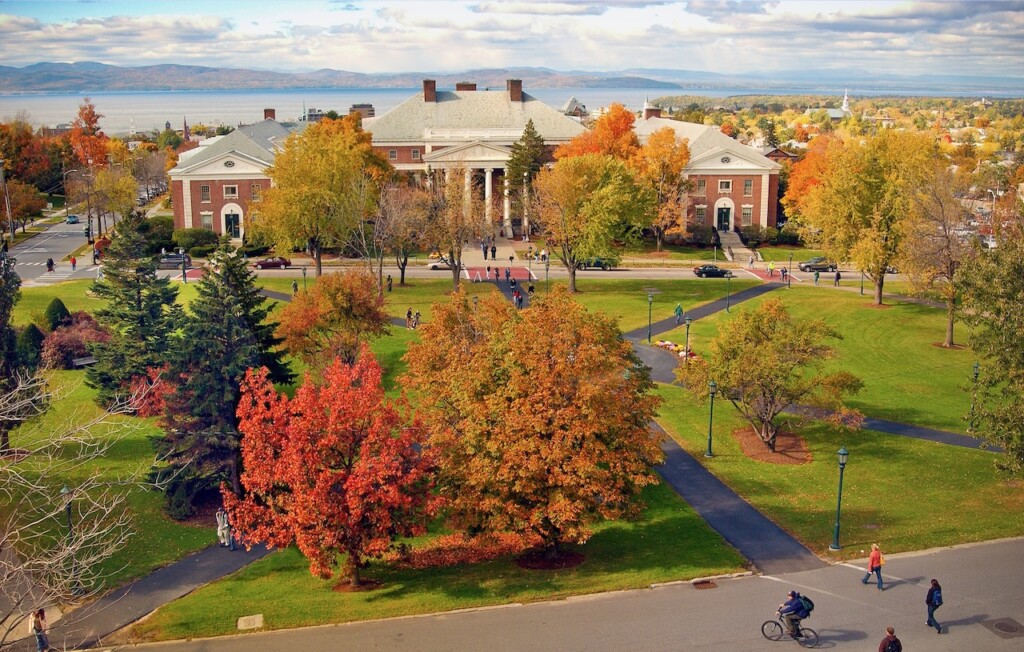
Hosted at the University of Vermont
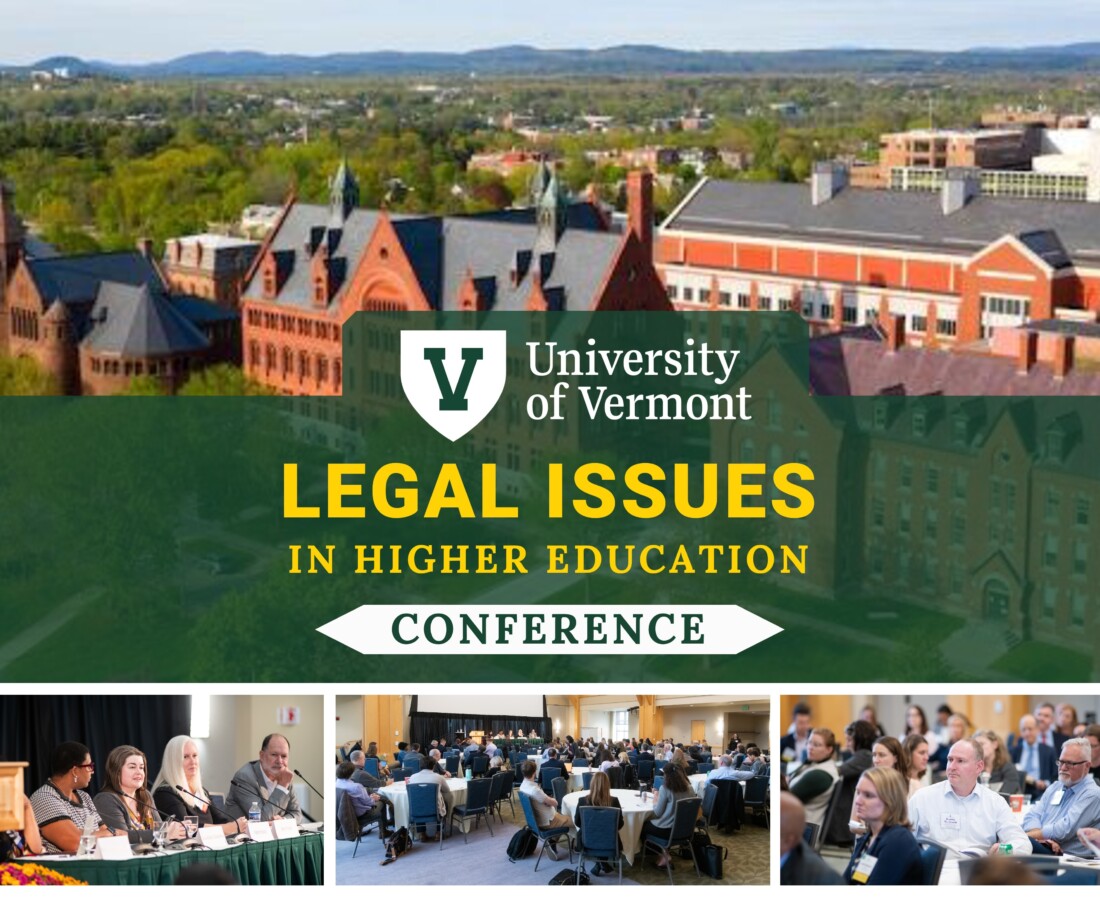
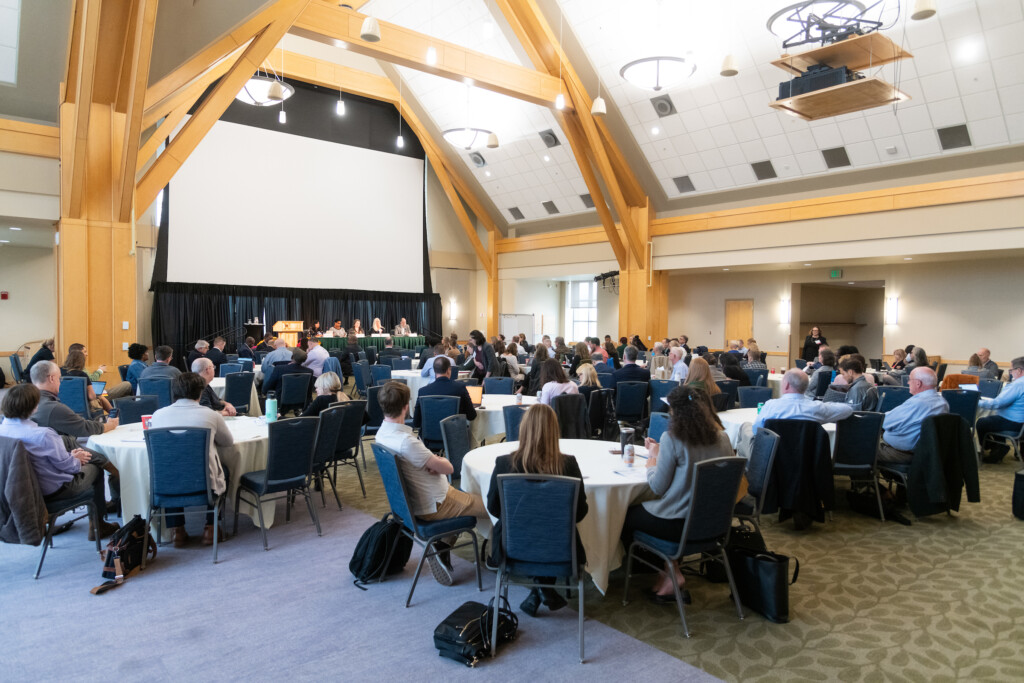
Legal Issues in Higher Education Conference
A conference for higher education professionals where complex legal situations are discussed, best practices are shared, and new higher education law strategies are forged.


Key Topics at the 2025 Legal Issues Conference:
1. Facilitating Civil Discourse on Campus
Ensuring respectful and productive dialogue on campus is a growing priority. Eva Chatterjee-Sutton, known for her expertise in institutional responses to harassment and violence, underscores its significance:
“Join us as we explore how robust, honest, and constructive dialogue advances the public interest in higher education. Civil discourse is vital to the pursuit of knowledge and leadership in society; promoting civil discourse is fundamental to upholding justice, fostering learning and ensuring that graduates can disagree without being disagreeable while pursuing truth and understanding within and beyond the law. In an era of heightened polarization and diverse viewpoints, a dedicated session on civil discourse at The Legal Issues Conference at UVM is both timely and essential.”
This discussion will equip participants with strategies to foster open and inclusive campus environments.
2. Athletics Compliance and Transgender Protections
Title IX has a new twist this year – the focus has shifted from sexual violence to a more targeted approach. Leslie M. Gomez, a Title IX attorney who focuses on improving institutional responses to sexual and gender-based harassment, shares:
“Current federal enforcement priorities have upended longstanding protections related to gender identity and expression, with a marked focus on transgender students and athletes. The 2025 Vermont Legal Issues in Higher Education Conference will provide the opportunity for holistic discussion as higher education institutions navigate conflicts in federal and state civil rights protections and seek to integrate legal, moral, and ethical considerations. The conference will include discussion of the latest OCR enforcement actions, federal Executive Orders, and athletics organization actions.”
3. The Stop Campus Hazing Act and Clery Act Updates
Ensuring compliance with newly enacted federal legislation, The Stop Campus Hazing Act, is a priority as we enter into the implementation phase for SCHA. Kimberly Novak, a leader in prevention and accountability, states:
“As the implementation process for the Stop Campus Hazing Act rapidly approaches, many institutions are focusing on the “numbers”—and understandably so. But compliance is about more than just checking boxes. It is essential that we lead our campuses toward full compliance not just in form but in function. This Act requires us to move beyond a simple checklist of “how to do its” and engage in a deeper conversation about why each requirement matters—for the safety of your student community and the protection of your institution.”
This session will provide actionable guidance to enhance campus safety and support compliance with SCHA.
4. Immigration Update for Undocumented and International Students
Supporting all students, regardless of immigration status, is a priority for inclusive campuses. Steven J. McDonald, J.D., an expert in regulatory compliance, reflects:
” International students — both documented and undocumented — enrich our communities in numerous ways and need and deserve our support. Providing such support within the framework of immigration law and the current political environment is a complex, but also essential, responsibility. We are addressing this issue at the 2025 Legal Issues Conference to equip administrators with the knowledge they need to navigate these legal challenges while continuing to foster inclusivity on campus and ensuring that all students, regardless of their immigration status, have access to the resources and opportunities they need to succeed.”
This topic will focus on strategies to support these student populations effectively.
5. Remote Work Policies and Employment Law Implications
The shift to remote work has transformed employment practices. Kyle Norton, with expertise in institutional leadership, adds his perspective:
“As remote and hybrid work models become permanent fixtures in higher education, institutions must navigate a complex web of employment law considerations, from wage and hour compliance to ADA accommodations and multi-state jurisdictional challenges. The legal and operational risks of poorly crafted or inconsistently applied remote work policies are growing, particularly as faculty and staff expectations evolve. This session will equip attendees with legal insights, policy best practices, and strategies to mitigate risk while supporting flexible work arrangements that align with institutional goals.”
This discussion will help institutions adapt to this evolving workplace trend.
6. Campus Student Health and Mental Health Responses
Managing high acuity mental health needs is a growing challenge for institutions. Leslie M. Gomez, an attorney who advises colleges and universities about effective institutional responses to critical incidents, states:
“Addressing high acuity mental health needs and suicidal ideation on campus requires a coordinated, legally sound approach to protect students while supporting institutional responsibilities. This topic is vital for the 2025 Legal Issues Conference, as it equips higher education leaders to respond effectively to complex mental health challenges while staying compliant with applicable laws. By prioritizing this discussion, we enable campuses to foster a safer, more supportive environment for all students.”
This session will explore practical and compliant responses to these pressing concerns.
Explore More at the 2025 Legal Issues Conference
These topics exemplify the depth and breadth of insights that will be shared at the 2025 Legal Issues in Higher Education Conference. Each session is designed to tackle the most pressing legal and compliance challenges facing higher education today. Attendees will leave with actionable strategies and a deeper understanding of how to adapt to a rapidly evolving educational landscape.