
Areas of Interest
Forestry, forest carbon, fish and wildlife science, natural resources, hydrology, dashboard development, workflow automation, remote sensing, climate modeling, botany
Bio
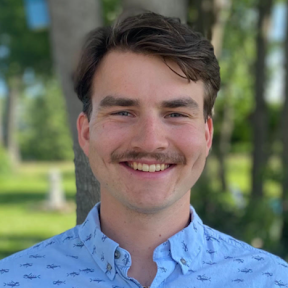
I graduated from the University of Vermont with a degree in Forestry, with concentrations in GIS and computer science. My professional career has spanned both timberland investment and forest carbon, with my most recent role bringing those two sectors together.
Throughout my career, I have developed carbon projects across Vermont, Maine, and the broader United States, as well as internationally in Colombia, Cambodia, the Democratic Republic of the Congo, and Kenya. Day to day, my work involves coding in Python and R, performing spatial analysis in ArcGIS Pro, and using forest modeling softwares such as Forest Vegetation Simulator (FVS) and Woodstock.
In a consulting capacity, I also have partnered with several natural resource organizations to develop GIS models and data visualization tools. This includes work with the Forest Ecosystem Monitoring Cooperative, focused on understanding projected climate change impacts on tree species across the northeastern US; the Native Fish Society, focused on the recovery of wild Pacific salmon and steelhead populations; and the Cascade Carnivore Project, where I have analyzed Canada Lynx habitat distribution throughout the northern Cascade Range.
Why students should study GIS
Wanting to learn GIS because it’s a marketable skill is a perfectly good reason to be here — but GIS is at its best when you apply it to projects you actually care about. Pursuing that curiosity through work outside the bounds of a certificate program will go a long way in making you a stronger geospatial analyst, and let you see firsthand just how powerful GIS can be.