
Overview
UVM’s Lab Safety and Risk Awareness is a 40-hour, fully online, self-paced non-credit course that teaches laboratory hazard recognition, risk assessment, the hierarchy of controls, PPE selection, and emergency response. It is designed for career changers, undergraduate STEM students, research and lab assistants, and newly hired lab staff, and it is the first course in UVM’s stackable laboratory pathway, which continues into the Biotechnology Technician Certificate and other lab courses. The course costs $299, awards a UVM certificate of completion, and is offered by the University of Vermont’s Professional and Continuing Education division (PACE) with the Larner College of Medicine.
Picture Your First Week in a Lab
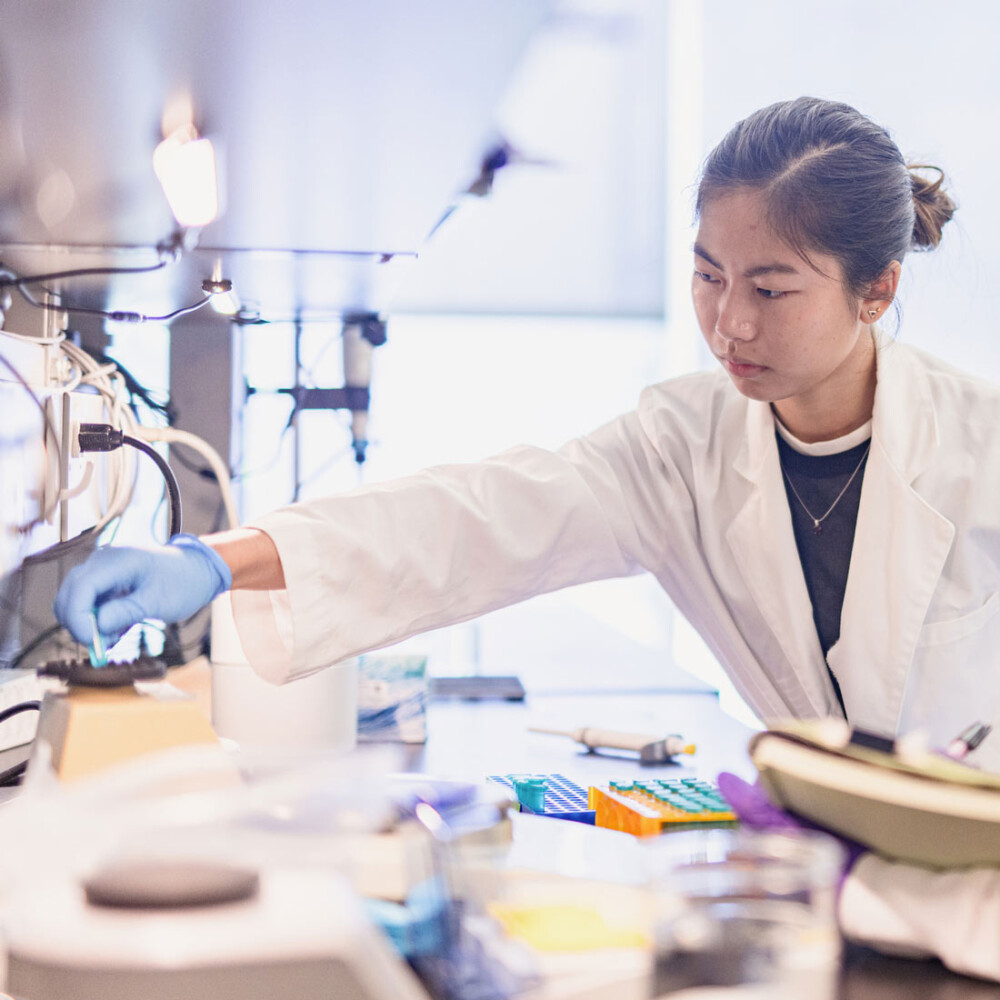
A new lab job starts with a lot to take in: fume hoods and biosafety cabinets, eyewash stations and spill kits, safety data sheets, PPE rules, and waste procedures. After this course, you’ll know what each one is for and when it matters. You’ll also know how to tell a biological hazard from a chemical one, how a risk assessment works, and what to ask before you start a task.
The baseline skills you’ll learn here are expected for the job.
Your lab will still train you to use its own equipment. You’ll arrive already understanding why it’s there, so you can focus on learning the procedures and asking good questions.
Over four weeks, you’ll practice with realistic lab scenarios, from rating a risk to choosing controls to responding to a spill, exposure, fire, or evacuation. You’ll also learn how labs review incidents and update their practices, so safety keeps improving over time
What You’ll Be Able to Do
- Explain lab safety culture and your responsibilities as part of a lab team.
- Identify common biological, chemical, physical, ergonomic, and environmental hazards.
- Rate risk by likelihood and severity and complete a basic lab risk assessment.
- Recommend controls using the hierarchy of controls and choose the right PPE for common tasks.
- Apply safe handling, waste, contamination prevention, documentation, and reporting practices.
- Respond to common lab emergencies and exposure incidents.
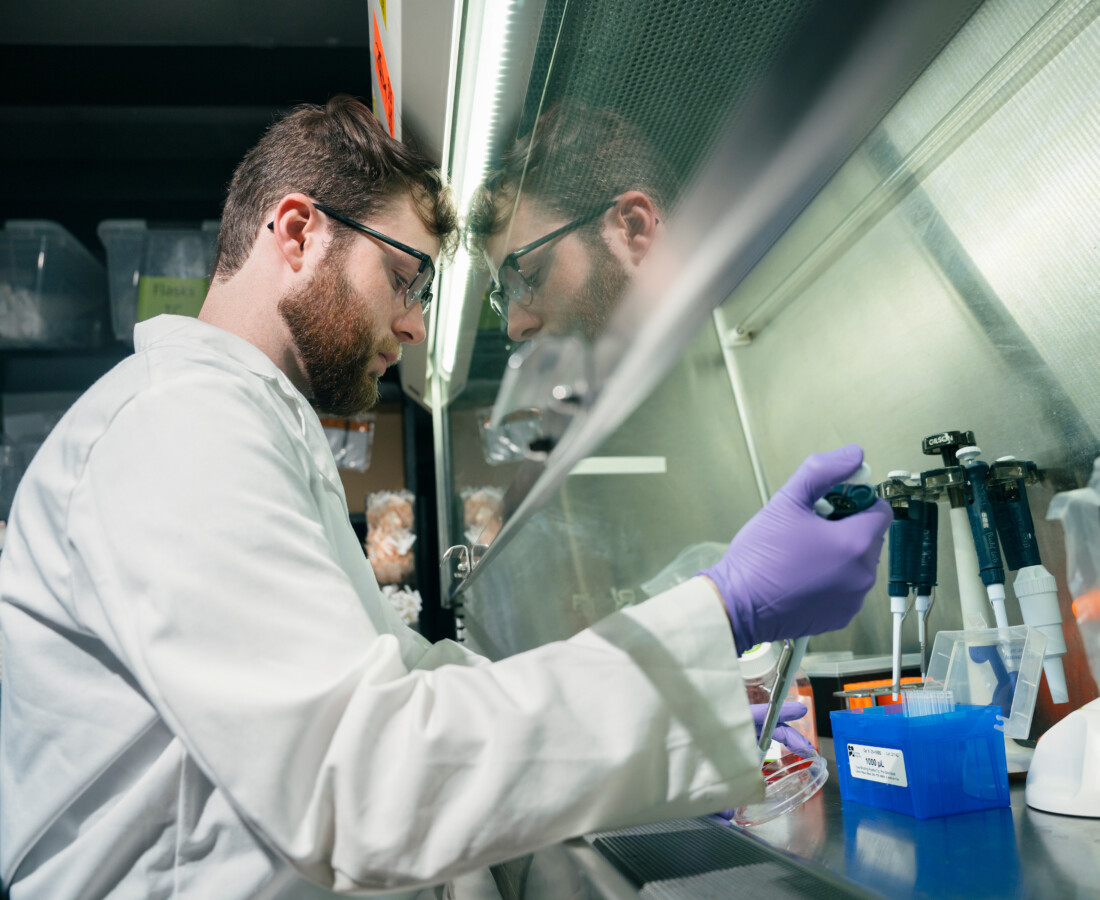
Lab technician jobs are growing
- 7% job growth from 2025 to 2035 for biological technicians, which the Bureau of Labor Statistics classifies as much faster than average.
- 5,500+ jobs added with that growth to the 74,400 biological technicians working in the U.S. in 2025.
Source: U.S. Bureau of Labor Statistics, Occupational Outlook Handbook, Biological Technicians
Admissions
Who is Lab Safety and Risk Awareness for?
If you’ve never worked in a lab, this course is built with you in mind. Its 40 hours of coursework are for people getting ready for lab work or just starting it:
- Career changers and adult learners with little or no lab experience
- Undergraduate STEM students and research assistants preparing for lab work
- Newly hired lab staff who want a foundation before site-specific training
- Anyone planning to apply to UVM’s Biotechnology Technician Certificate
- Employers in biotech, research, manufacturing, quality control, environmental testing, and healthcare labs looking for a shared starting point for new hires
No prior lab experience is required.
Curriculum
The course moves from how a lab’s safety culture works, to spotting and rating hazards, to controlling them and responding when something goes wrong. It closes with a final assessment built on realistic lab scenarios.
Module 1. Foundations of Laboratory Safety
How safety compliance and culture work in a lab, and the safe practices you’ll use every day.
Module 2. Recognizing Laboratory Hazards and Assessing Risk
How to identify and assess risk, with a close look at chemical, biological, animal, and physical hazards.
Module 3. Minimizing Risks in the Laboratory
How the hierarchy of controls reduces risk, with a focus on engineering controls and lab PPE.
Module 4. Emergency Preparation and Response in the Laboratory
How to plan for emergencies and respond when one happens, including life safety. The module ends with an integrated final assessment.
Career Outcomes
Your Path into Lab Work
This course is the first step in UVM’s stackable lab pathway. Here’s how a career changer could move through it.
Start with Lab Safety and Risk Awareness
Four weeks online, about 10 hours a week. You learn how labs recognize, rate, and control risk, and you finish with a UVM certificate of completion.
Build hands-on skills in the Biotechnology Technician Certificate
This course prepares you well for UVM’s 24-week Biotechnology Technician Certificate. You’ll complete online coursework with a weekly three-hour lab session on UVM’s campus. No science degree or prior lab experience is required, and it’s tuition-free for eligible participants.
Work in a UVM research lab
Some Biotechnology Technician students finish with an optional eight-week practicum in a working UVM research lab.
Apply for your first lab role
Entry points include lab assistant, research assistant, biotechnology technician trainee, quality control technician trainee, and environmental testing assistant.
You can also continue into individual courses in biosafety, aseptic workflow, mammalian cell culture, and microscopy.
Why UVM?
Built with UVM’s medical school
PACE developed this course with UVM’s Larner College of Medicine, a level 1 trauma center and R1 research institution. The same partnership behind the Biotechnology Technician Certificate.
You practice making the call
Each module puts you in realistic lab scenarios, so you can spot the hazard, rate the risk, pick the control, and decide what to do next.
A first step into UVM’s lab pathway
Start here, then continue into the Biotechnology Technician Certificate or UVM’s other lab courses with a safety foundation already in place.
Four weeks, on your schedule
The course is fully online and self-paced, so it fits around classes, a current job, or a job search.

FAQ
No. The course is built for people preparing for lab work, including people who haven’t worked in a lab yet.
No. Employers and institutions train their people on their own procedures, equipment, and requirements, including OSHA, biosafety, and chemical hygiene training. This course prepares you for that training so you can get more out of it.
No. The course is online and covers foundational knowledge. Authorization to work independently in a lab, or at biosafety level 2 (BSL-2), comes from your employer or institution.
Most short trainings cover compliance basics for people already working in a lab, in an hour or two. This course is 40 hours over four weeks and built for people preparing for lab work, with scenario practice and a final assessment. Once you’re hired, you’ll still complete your employer’s required training.
No. You earn a UVM certificate of completion. The course covers how regulatory and institutional requirements shape lab work, but it doesn’t award an OSHA card.
No. It isn’t a prerequisite. It’s a good place to start if you want a foundation in lab safety before you start the Biotechnology Technician Certificate.
A UVM certificate of completion and a final scenario assessment that shows how you identify hazards, assess risk, choose controls, and respond to incidents.
Yes. The course is fully online, and you work through the four weeks on your own schedule.
A certificate of completion from the University of Vermont. The course is non-credit.
We estimate that you will dedicate about 10 hours per week on course work, which includes readings, videos, and related activities (e.g., discussions, assignments, and quizzes).
If a student needs to cancel their attendance, they must do so at least 10 business days prior to the start date of the course to receive a 75% refund. No refunds will be issued for cancellations made after this 10-business day deadline. Student cancellation requests can be initiated through the Modern Campus LLEE student portal.
No prior degree is required. This is a non-credit professional course open to adults of varied backgrounds.
No, this course is self-paced and designed for you to complete on your own schedule in four weeks.
Yes, this program is eligible for 4.5 UVM PACE Continuing Education Units (CEUs). These CEUs are automatically awarded to students who successfully complete the program. CEUs are listed on the downloadable certificate you can access through your Modern Campus LLEE student portal.
Many professional organizations, licensing boards, or certifying bodies accept CEUs from accredited providers like the University of Vermont, but acceptance is not automatic and varies by organization. Professionals should always verify in advance with their specific regulating body or association whether the CEUs from the particular UVM course you are taking will count toward their requirements.
To request recognition of UVM PACE CEUs with your professional organization:
- Download or request an official certificate or verification letter for the completed course/program.
- Submit the official UVM documentation directly to your professional organization, licensing board, or certifying body through their required process (often an online portal, application form, or mailed packet).
- Include any additional materials they may require, such as course descriptions, agendas, or learning objectives (available on the program webpage or by request to PACE).
If your organization requires specific formatting or additional verification, contact UVM PACE at learn@uvm.edu or (802) 656-2085, and we will be happy to assist with documentation. Early confirmation with your professional body is recommended to avoid any delays in CEU approval.
If you are a non-credit student seeking accessibility support, please email access@uvm.edu and the UVM Student Accessibility Services team will be able to assist. In your email, please include that you do not have a 95 number/NetID.
Lab Safety and Risk Awareness contains 4 modules and will take about 40 hours. It is self-paced so that you can complete it on your own schedule.
You will continue to have access to the course for one year after the last day of the course.
The course is delivered through UVM’s online learning platform called Brightspace. It’s important to note that Brightspace will only work with a desktop or laptop computer. It is not designed to be used with phones or tablets (e.g., iPads), so please make sure you have access to a desktop and/or laptop computer for the duration of the class.
Our Advisors are here to help. Please call us at 802-656-2085 or submit the inquiry form available on this site.
No. The course is built for people preparing for lab work, including people who haven’t worked in a lab yet.
Advising and Student Support
You have the goal; we’ll help you achieve it
We are dedicated to helping you access UVM. It is our role to get to know your experience and goals, assist you in choosing courses, guide you through registration, and serve as your resource throughout your time at UVM.
Curious if your past college credits apply at UVM? Want to understand where a program will take you after completion? Looking for resources for financial aid, tutors, or UVM policies? We’re here to help.
Ready to get started?
Request Information
Submit this form to receive additional program information.