
- Overview
- Real lab work from week one and a credibility to get hired
- What You'll Learn: Walk in Ready to Work
- Lab Safety and Standard Operating Procedures
- Lab Techniques and Equipment Operation
- Data Collection, Analysis, and Documentation
- Professional and Workplace Skills
- Advanced Skills (Optional Internship Track)
- A Hands-On, Employer-Informed Approach
- Admission
- Curriculum
- Instructors
- FAQ
Overview
Real lab work from week one and a credibility to get hired
Vermont’s life sciences employers are hiring, and most entry-level lab technician roles do not require a four-year science degree. What they require is someone who can work safely at a lab bench, follow a procedure exactly, and record results a scientist can trust.
Most biotechnology technician training takes two years, or it is all theory with no time at an actual bench. They can cost up to $15,000. This program is different on all counts. It runs 24 weeks, and from your first cohort session you are doing the work, not reading about it. You’ll gain hands-on lab experience with weekly in-person lab sessions. And, due to the high demand for lab technicians, eligible participants can earn this certificate tuition-free.
This biotechnology certificate program gives you:
- Hands-on lab bench work from day one
- A 24-week path
- A practicum in a live UVM research lab
- A portfolio that shows employers what you can do
- A path to a higher paying career without debt
What You’ll Learn: Walk in Ready to Work
Over 24 weeks you build a practical foundation in the skills entry-level biotech employers hire for, from lab safety fundamentals to advanced analytical methods. As an online lab technician certificate, the program pairs self-paced modules with in-person bench work.
You’ll learn to:
- Work safely and to established standards, from personal protective equipment (PPE) and safety data sheets (SDS) to writing and following standard operating procedures (SOPs).
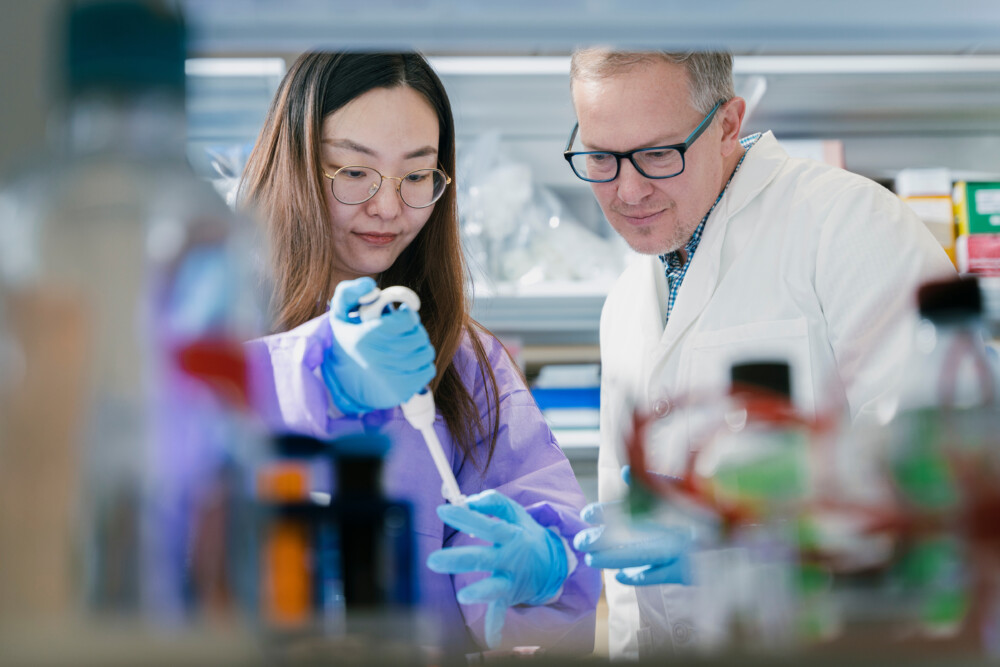
- Learn core bench techniques: pipetting, solution preparation, dilutions, centrifugation, and more.
- Turn results into insight with Excel, GraphPad Prism, and basic statistics.
- Use molecular techniques including DNA extraction, PCR, and gel electrophoresis.
Below is a breakdown of each skill area you will build across the program.
Lab Safety and Standard Operating Procedures
Safety and compliance are the foundation of any professional lab environment. You will learn OSHA regulations, SDS handling, proper PPE use, waste disposal, spill response, and emergency procedures. You will also learn how to read, follow, and eventually draft Standard Operating Procedures (SOPs), the backbone of Good Manufacturing Practices (GMP) in the industry.
Lab Techniques and Equipment Operation
You will develop hands-on proficiency with the core techniques and instruments found in professional biotech labs, including:
- Pipetting, solution preparation, dilutions, and serial dilutions
- pH meters, osmometers, centrifuges, and UV-VIS spectrometers
- PCR, DNA extraction, and DNA gel electrophoresis
- Microscopy for tissue and cell culture
- Sterile technique
- SDS-PAGE and Western blots
- Column chromatography
- Instrument calibration, maintenance, and basic troubleshooting
Data Collection, Analysis, and Documentation
Modern biotech labs are data-driven. You will learn how to maintain accurate lab notebooks, document procedures and results, and work with analytical tools including Microsoft Excel and GraphPad Prism. The curriculum covers core statistical concepts including mean, standard deviation, variability, and precision, giving you the ability to evaluate and communicate your own results before handing them off to a scientist or supervisor.
Professional and Workplace Skills
Technical skills get you in the door. Workplace skills keep you there. The program weaves professional development throughout the curriculum, covering how to communicate clearly with coworkers and supervisors, how to come to problems with solutions rather than just questions, and how to ask questions effectively in a lab environment where guessing can be costly. You will also practice working under deadlines and managing time-sensitive tasks.
Advanced Skills (Optional Internship Track)
Students who pursue the optional internship extension will have the opportunity to develop more advanced skills including:
- Mammalian cell culture
- Advanced microscopy techniques
- Genomics techniques
The internship track is designed for students who want additional hands-on exposure before entering the job market.
A Hands-On, Employer-Informed Approach
Biotech hiring is not about what you have read. It is about what you can do at a bench under real conditions.
This laboratory technician training program was built with input from lab leaders who told us exactly what they look for in entry-level hires: lab safety, foundational skills like documentation and pipetting, basic math, communication, and critical thinking. The curriculum teaches those directly, in a lab, rather than around them in a lecture hall.
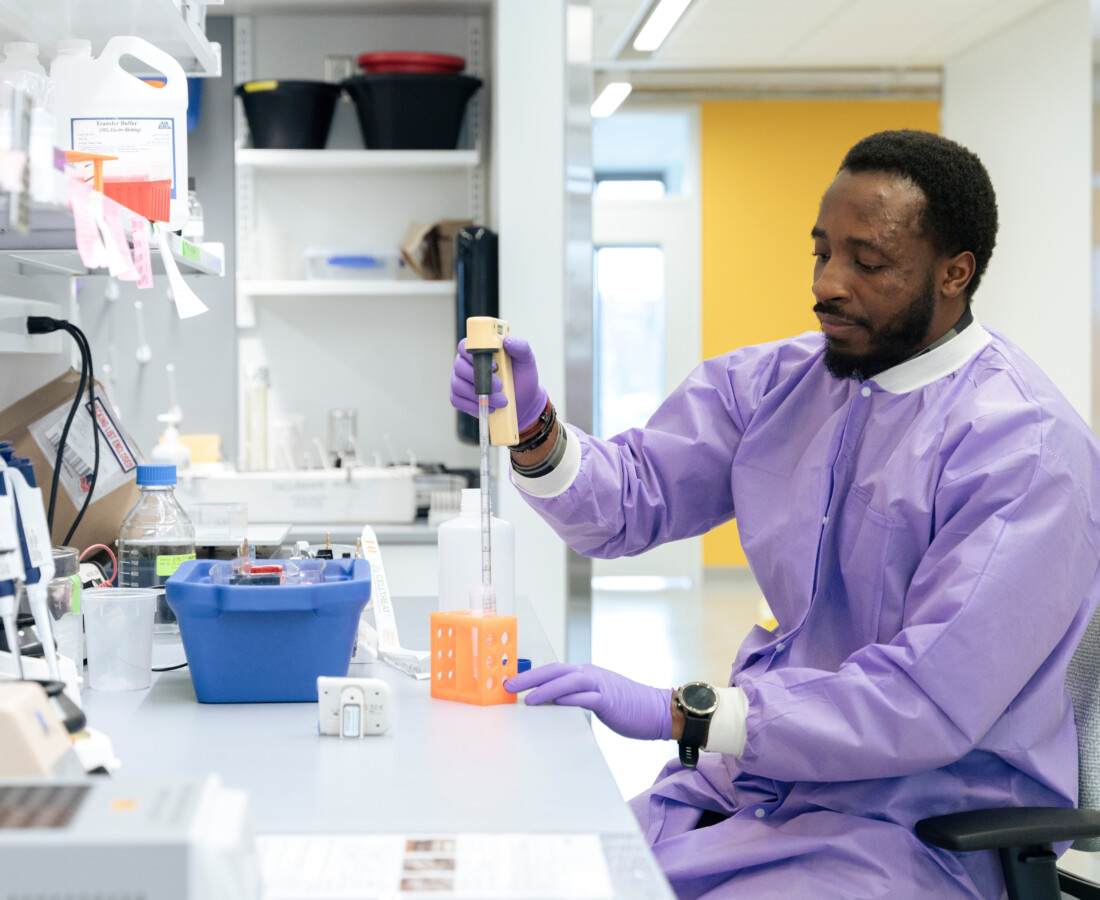
It is taught through UVM Professional and Continuing Education and anchored by an eight-week practicum in a working UVM research lab, a Carnegie R1 institution. You learn alongside working scientists, on real equipment, in the environment you are training to join.
Train at a Trusted Research Institution
-
Top 3% of research universities nationally
UVM is a Carnegie R1 institution with the highest level of research activity. -
A direct placement in a working UVM research lab
Your practicum puts real bench experience on your resume before you graduate. -
Tuition-free funded to build Vermont’s workforce
A $2.7 million congressional appropriation covers the full cost.
Built for career changers
Online coursework fits around a job and a life, paired with in-person labs on the UVM campus and clear weekly deadlines to keep you on track.
Hands-on from day one
Lab work starts your first week to apply everything you learned online.
Tuition-free
Funded by a $2.7M congressional appropriation, no cost to eligible participants.
A credential people trust
Earn a certificate from the University of Vermont, plus a portfolio to show prospective employers.
Admission
This program is a good fit if you:
- Are curious about hands-on science but do not have a formal science background
- Are a career changer, veteran, or adult looking for a faster route into biotech than a two-year degree
- Want to work in a laboratory, production, or quality control environment
- Are detail-oriented, comfortable following precise procedures, and enjoy solving problems with structure
- Can commit to the full 24 weeks of coursework, 7-10 hours per week
No science degree or prior lab experience is required. The program builds foundational skills from the ground up and is designed for people entering the field for the first time.
Curriculum
The program blends online coursework with in-person lab work and includes:
- Self-paced online modules covering lab safety, basic biology, chemistry, math, scientific methods, and Good Manufacturing Practices. You move through the material with your cohort, with assignments due at regular intervals.
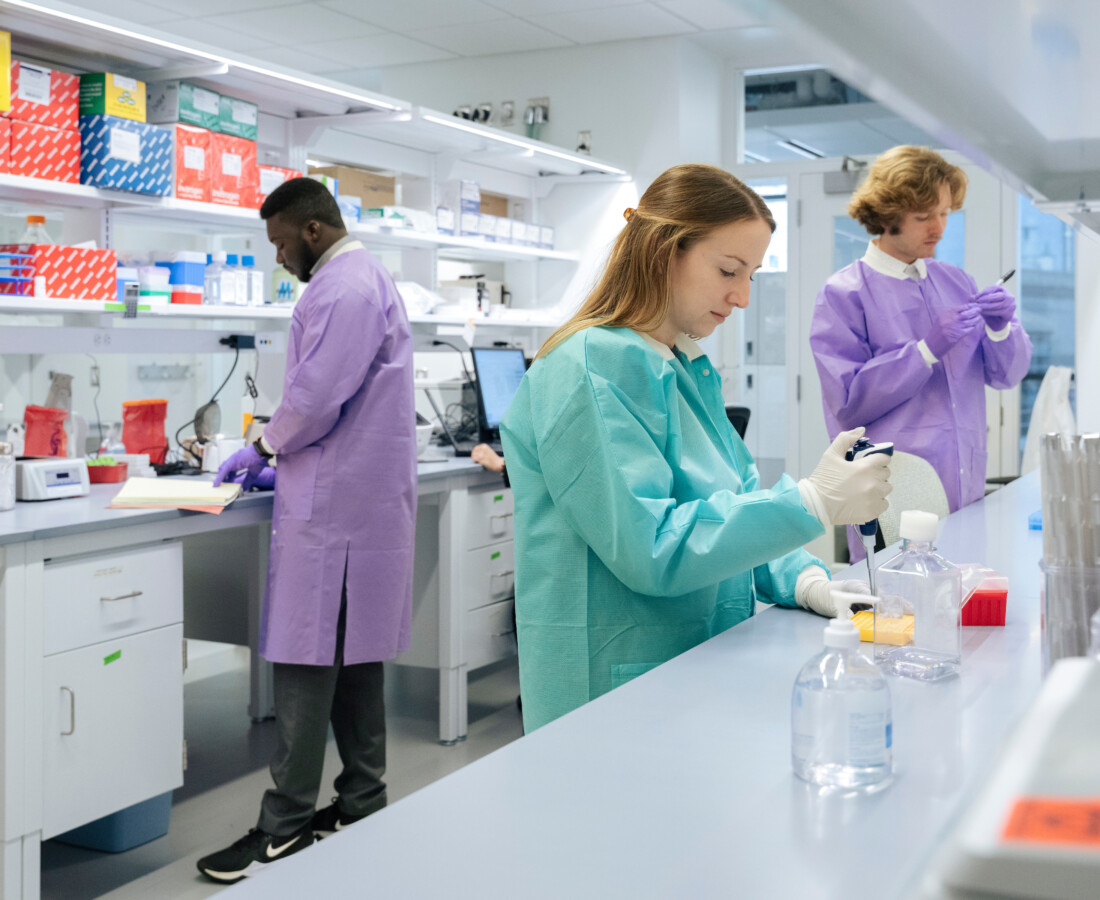
- Weekly hands-on labs on the UVM campus, where you practice the bench techniques the coursework introduces. You will be asked to choose either Saturdays, 8:30AM to 11:30AM or Wednesdays, 5:30PM to 8:30PM.
- For some students, the final eight weeks can be a practicum (a direct placement in a UVM research lab, about 10 hours a week during the workday. You’ll work with your placement site to sort out a schedule that fits). Or you can choose to continue with what has worked for your life – 7 to 10 hours per week of online work including a weekly hands-on lab session.
Career Outcomes: Biotech Jobs in Demand
- About $61,880 median annual salary for Clinical Laboratory Technologists and Technicians nationally.
- 6.2% projected job growth for the occupation through 2035.
- Nearly 3,000 hires per month on average across the U.S.
Source: Lightcast Q1 2026 Data Set (Biological Technicians, SOC 19-4021)
Jobs You Can Get
Graduates of the Biotechnology Technician Certificate are prepared for entry-level positions across pharmaceutical, research, and biomanufacturing industries. Below are the most common roles our graduates pursue.
Biotechnology Technician
Biotechnology technicians support scientific research and development operations. Responsibilities typically include running experiments, operating and maintaining lab equipment, collecting and recording data, and ensuring compliance with lab safety and regulatory standards. It is the most common entry-level role in the biotech industry, with 1,600 monthly searches nationwide and LOW advertiser competition.
Median salary: approximately $52,000 (Lightcast Q1 2026 Data Set). Salaries in pharmaceutical manufacturing and biomanufacturing average closer to $60,000.
Biomanufacturing Technician
Biomanufacturing technicians work in the production side of biotechnology, operating equipment and managing processes involved in manufacturing pharmaceutical and biological products at scale. This is one of the fastest-growing roles in the industry, with search interest up 129% year over year.
Industries hiring: pharmaceutical manufacturing, cell therapy, mRNA platform companies, contract development and manufacturing organizations (CDMOs).
Quality Control Analyst
QC analysts test materials, products, and processes to ensure they meet regulatory and safety standards. In pharmaceutical and biomanufacturing environments, this role is critical for FDA compliance and product integrity. It is one of the most stable entry-level positions in the industry because every production operation requires it.
Research Associate
Research associates work alongside scientists in R&D lab environments, supporting experimental work including assay development, sample analysis, and data collection. This role is common in biotech startups and academic research institutions and often serves as a stepping stone to more senior scientific positions.

FAQ
A biotechnology technician is a lab professional who supports scientific research and manufacturing. The daily work usually involves operating equipment, running experiments, collecting and analyzing data, keeping accurate documentation, and meeting safety and regulatory requirements. It sits at the intersection of science and industry, and you do not need a graduate degree to start.
A laboratory technician is a lab professional who supports scientific research in any one of a number of different fields, including academic research, clinical labs, and biotechnology manufacturing. The daily work usually involves operating equipment, running experiments, collecting and analyzing data, keeping accurate documentation, and meeting safety and regulatory requirements. You do not need a graduate degree to start
The program runs 24 weeks at 7 to 10 hours per week. New cohorts begin in October 2026.
No science degree or prior background is required. The program is built for career changers and starts from the ground up. The best candidates are curious, good with their hands, and comfortable following precise procedures.
Graduates are prepared for entry-level roles in pharmaceutical, research, and biomanufacturing settings. Common positions include biotechnology technician, biomanufacturing technician, quality control analyst, and research associate.
Both work in biotech labs. Biotechnology technicians work across a broader range of settings, including research, development, and production. Biomanufacturing technicians focus on manufacturing pharmaceutical and biological products at scale. This certificate prepares you for both.
No. This is a non-credit professional certificate from UVM PACE. It does not confer academic credit or licensure. It is designed to give you job-ready lab skills and a portfolio for entry-level roles in the field.
No. The course is hybrid and asynchronous. You are welcome to read ahead, but there will be assignments and discussions (including responsive discussions) that will open week by week. The course features a mixture of weekly asynchrnous learning modules, which are done at your own pace over the course of the week, and a weekly in person lab session.
We estimate that you will dedicate 7 to 10 hours per week on course work, which includes readings, videos, and related activities (e.g., discussions, assignments, and quizzes), as well as an in-person 3-hour lab session.
If a student needs to cancel their attendance, they must do so at least 10 business days prior to the start date of the course to receive a 75% refund. No refunds will be issued for cancellations made after this 10-business day deadline. Student cancellation requests can be initiated through the Modern Campus LLEE student portal.
No prior degree is required. This is a non-credit professional certificate open to adults of varied backgrounds.
Yes, in addition to the weekly asynchronous learning materials, there is a 3 hour in-person lab session.
If you are a non-credit student seeking accessibility support, please email access@uvm.edu and the UVM Student Accessibility Services team will be able to assist. In your email, please include that you do not have a 95 number/NetID.
- Have questions about taking an online or distance education course? Visit the Online and Distance Education FAQ page
- Have more basic questions about Professional and Continuing Education? Visit our About Us and FAQs pages.
The Biotechnology Technician Professional Certificate course is 24 weeks long. There are 24 modules, each spanning one week. Each module starts on Mondays at 9:00 AM and ends on Fridays at 11:59 PM. To better accommodate students’ work and life schedules, we provide early access to each module on the Friday before the module starts. You will continue to have access to the course for six months after the last day of the course.
For most modules, you will be expected to post to the discussion boards and to complete a quiz/quizzes.
In addition to these modules, there is a weekly in person lab session that runs 3 hours.
The course is delivered through UVM’s online learning platform called Brightspace.
It’s important to note that Brightspace will only work with a desktop or laptop computer. It is not designed to be used with phones or tablets (e.g., iPads), so please make sure you have access to a desktop and/or laptop computer for the duration of the class.
Our Advisors are here to help. Please call us at 802-656-2085 or submit the inquiry form available on this site.
Advising and Student Support
You have the goal; we’ll help you achieve it
We are dedicated to helping you access UVM. It is our role to get to know your experience and goals, assist you in choosing courses, guide you through registration, and serve as your resource throughout your time at UVM.
Curious if your past college credits apply at UVM? Want to understand where a program will take you after completion? Looking for resources for financial aid, tutors, or UVM policies? We’re here to help.
Ready to get started?
Request Information
Submit this form to receive additional program information.